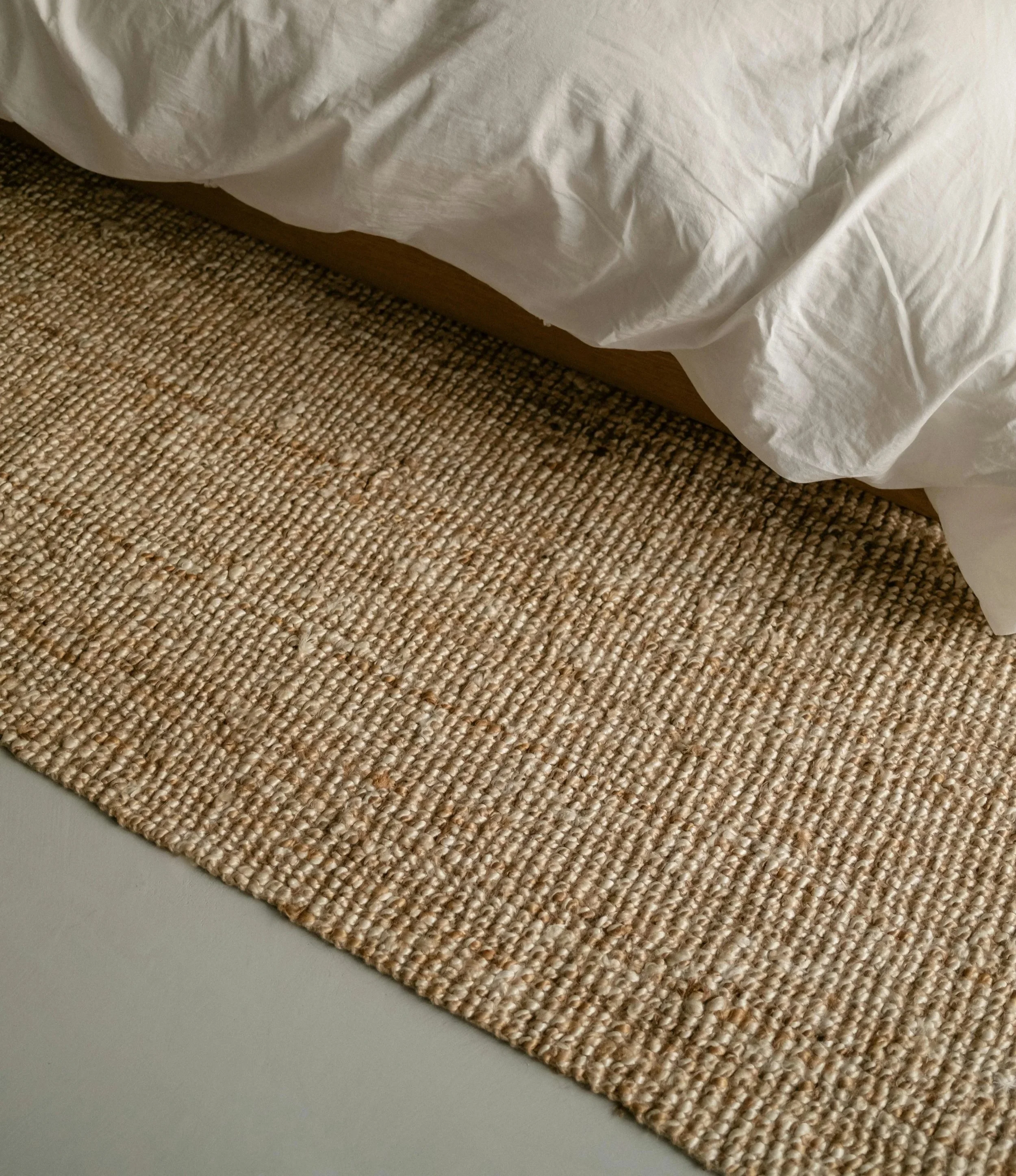
I love a good rug to anchor a room, but I especially love natural fiber rugs that organically bring warmth and texture to a room. And to me, no other material does it better than jute. Its natural fibers add an easy and relaxed feel that works beautifully in many settings, especially is a modern farmhouse/coastal style home.
But if you’ve ever unrolled or unfolded a new jute rug and found waves, creases, or curled corners, you’re not alone. Because jute is a natural fiber, it can wrinkle during shipping, storage, or even from changes in humidity inside your home. The good news? Most wrinkles can be smoothed out with a little patience and the right approach.
The More You Know: Why Jute Rugs Get Wrinkles
Jute rugs are tightly woven from plant fibers that are flexible but sensitive to moisture and pressure. When rugs are rolled tightly for shipping or stored folded, the fibers can temporarily hold those bends and creases, thus giving me a headache. You may also notice ripples from heavy furniture pressing unevenly and humidity fluctuations. This is why unlike synthetic rugs, jute needs a gentler touch to avoid damaging the natural fibers.
So What Can You Do?: The Best Ways to Remove Wrinkles From a Jute Rug
1. Time Is the Best First Course of Action
Many times, the easiest solution is simply allowing the rug to relax naturally. Unfold or unroll the rug completely and place it where it will be used. Let it sit flat for several days so the fibers can adjust to the room’s temperature and humidity. Many wrinkles disappear on their own within a few days.
Note: For curled corners or edges, place heavy books on problem areas, use furniture legs to anchor corners, smooth the rug by hand daily (I know, it is a pain… but remember, we love a jute rug).
2. Reverse Roll the Rug
For deeper creases, gently roll the rug in the opposite direction of the wrinkle. Here’s how: Roll the rug slowly and loosely, avoiding pulling tightly on the fibers. Leave it rolled for 1–2 hours, and unroll and lay flat again. This helps retrain the natural weave without stressing the fibers.
3. Use Gentle Heat CAREFULLY
Jute responds well to gentle warmth, but high heat can dry out or weaken the fibers. One of the safest methods— and my favorite— is using a steam iron with a thick towel placed between the iron and the rug. The towel acts as a protective barrier, helping diffuse the heat and prevent scorching or discoloration. Here’s how:
Lay a thick cotton towel over the wrinkled area
Set the iron to a low or medium steam setting
Press gently for a few seconds at a time
Avoid leaving the iron in one spot too long
Let the area dry completely afterward
Note: Because jute is highly absorbent, avoid excessive steam or moisture. Too much water can weaken the fibers or lead to mildew over time. for especially stubborn wrinkles, place a heavy book or piece of furniture over the area overnight after applying heat.
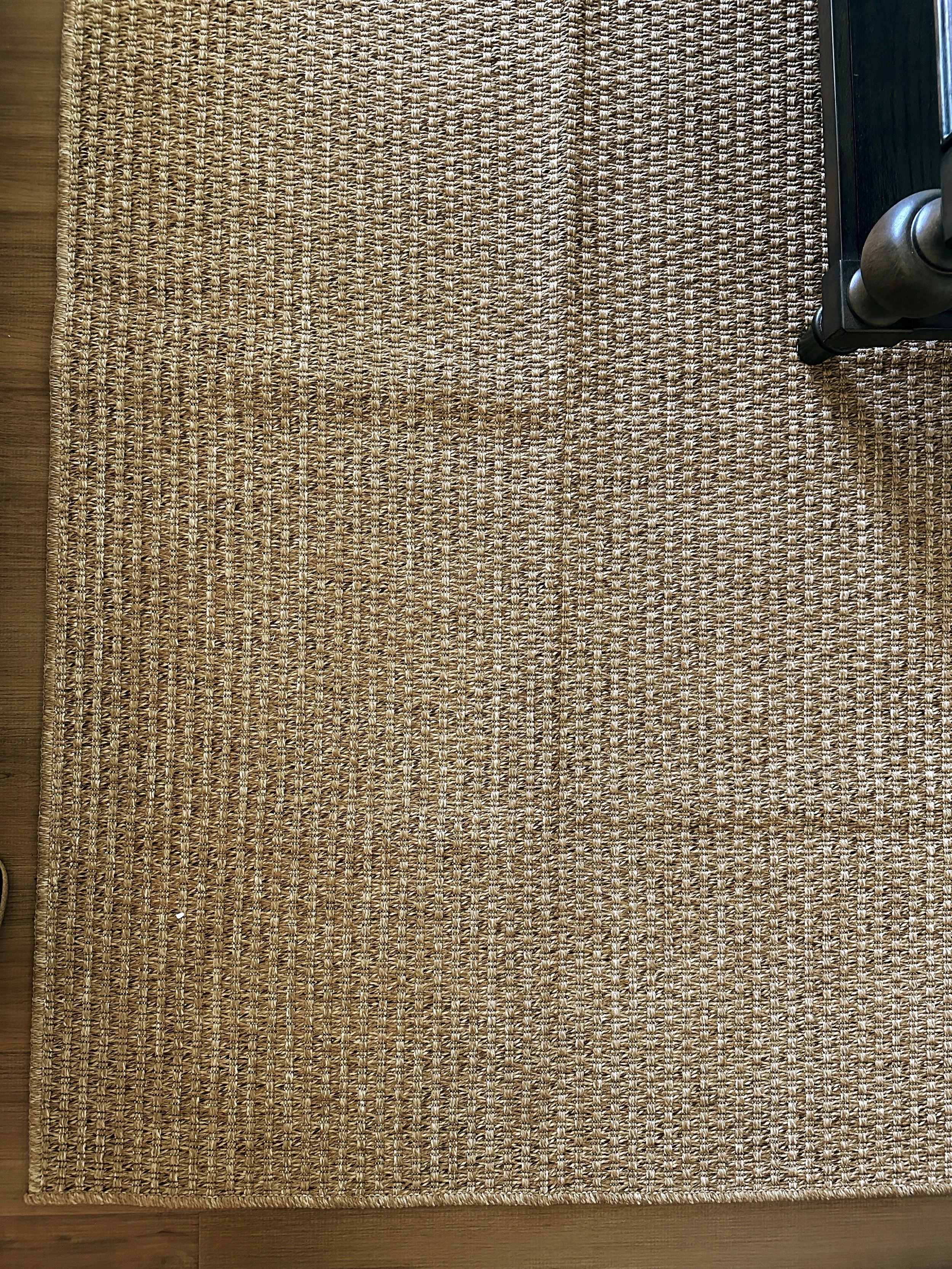
Before— you could see the folding lines
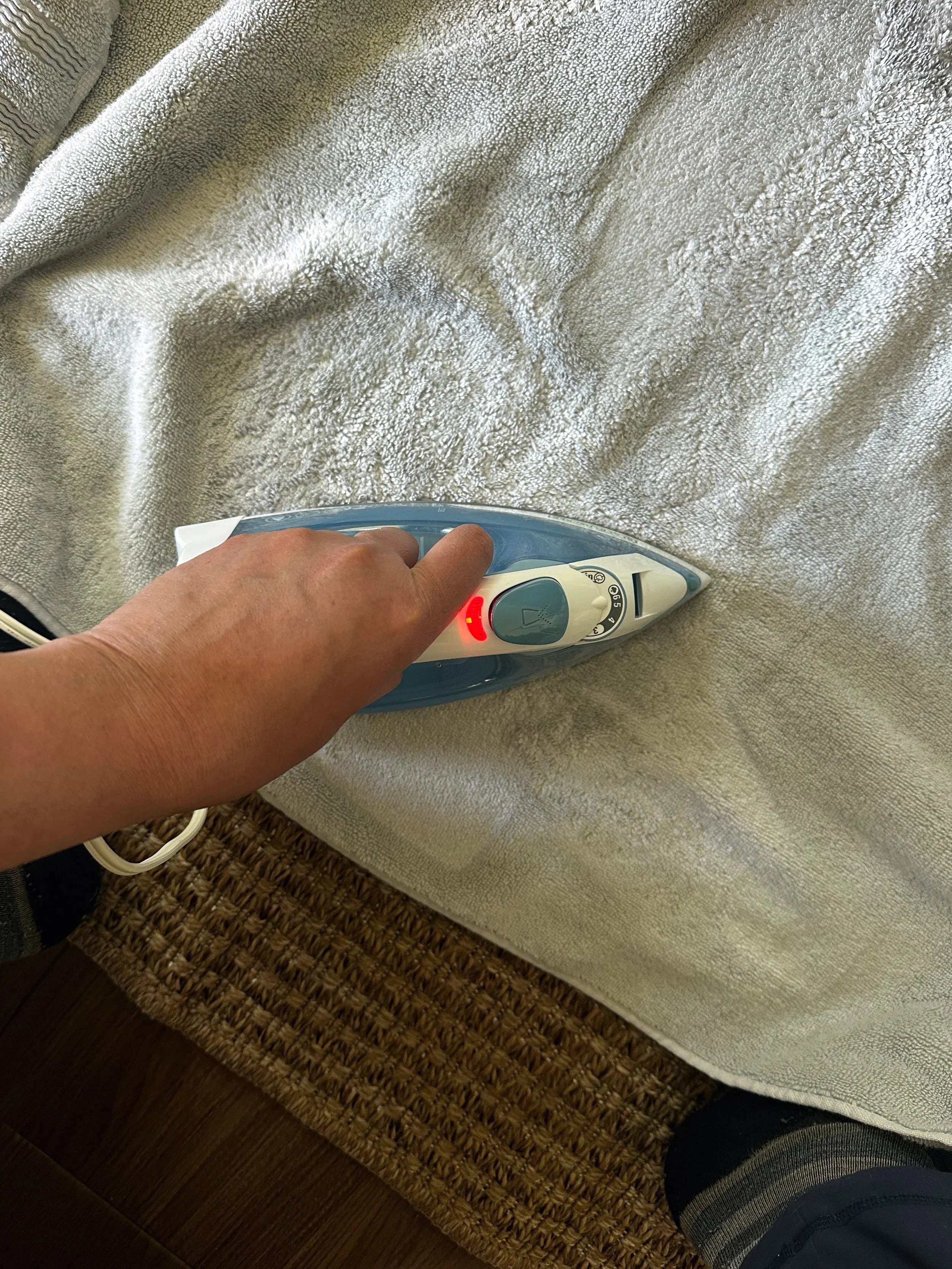
The key is slow heat and patience
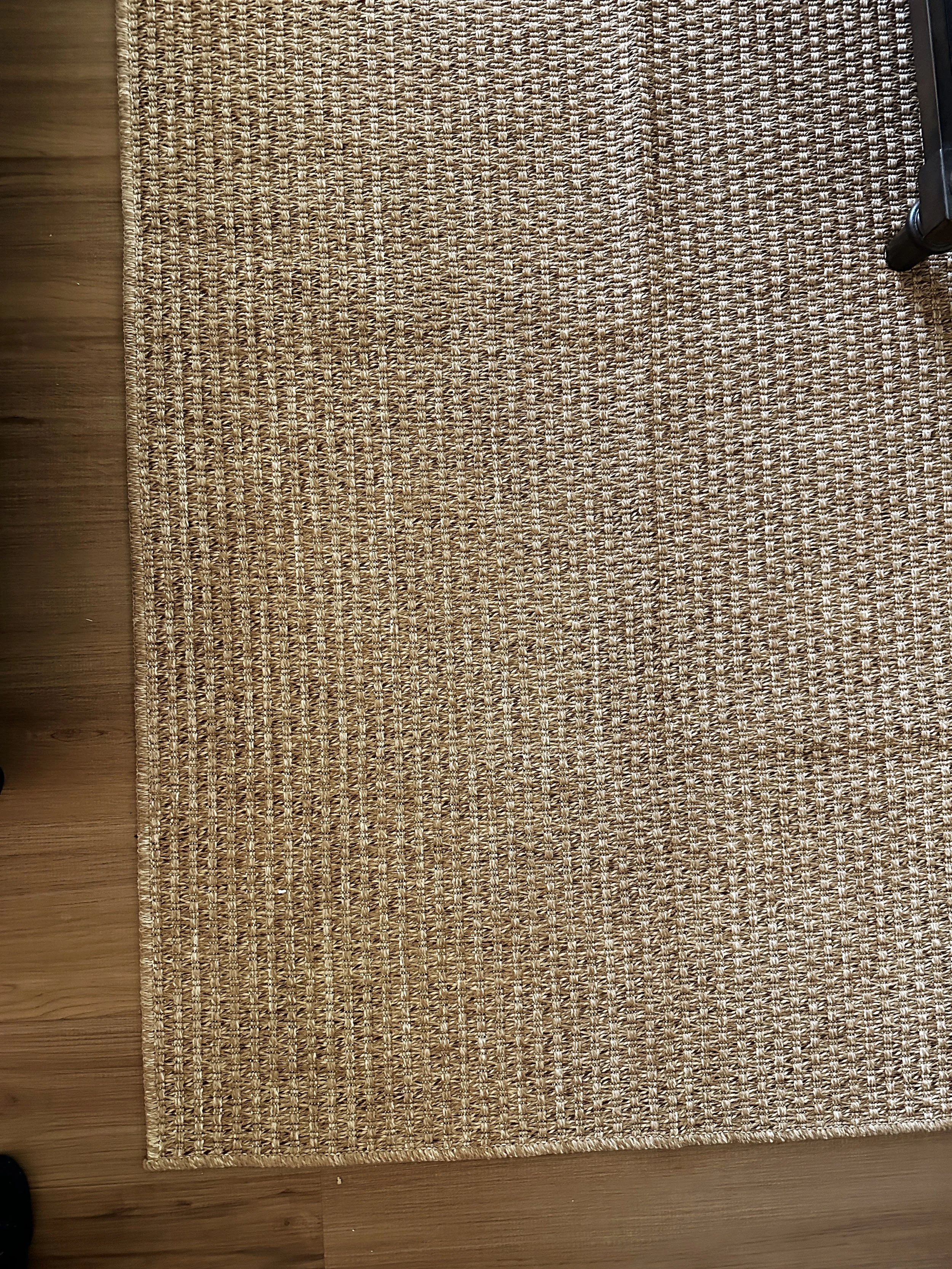
After only two passes, it is not perfect, but much better.
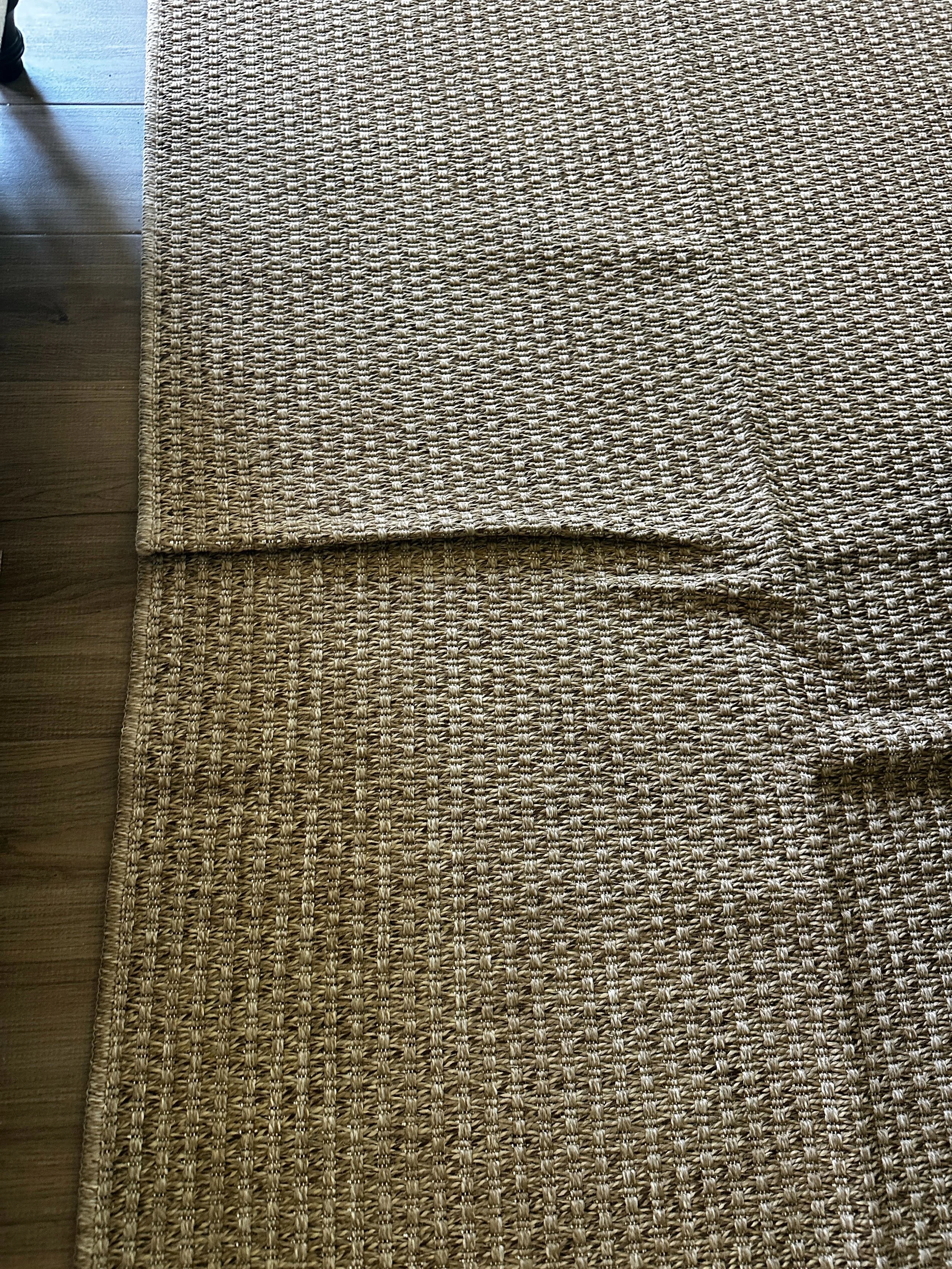
This was the worst folding line
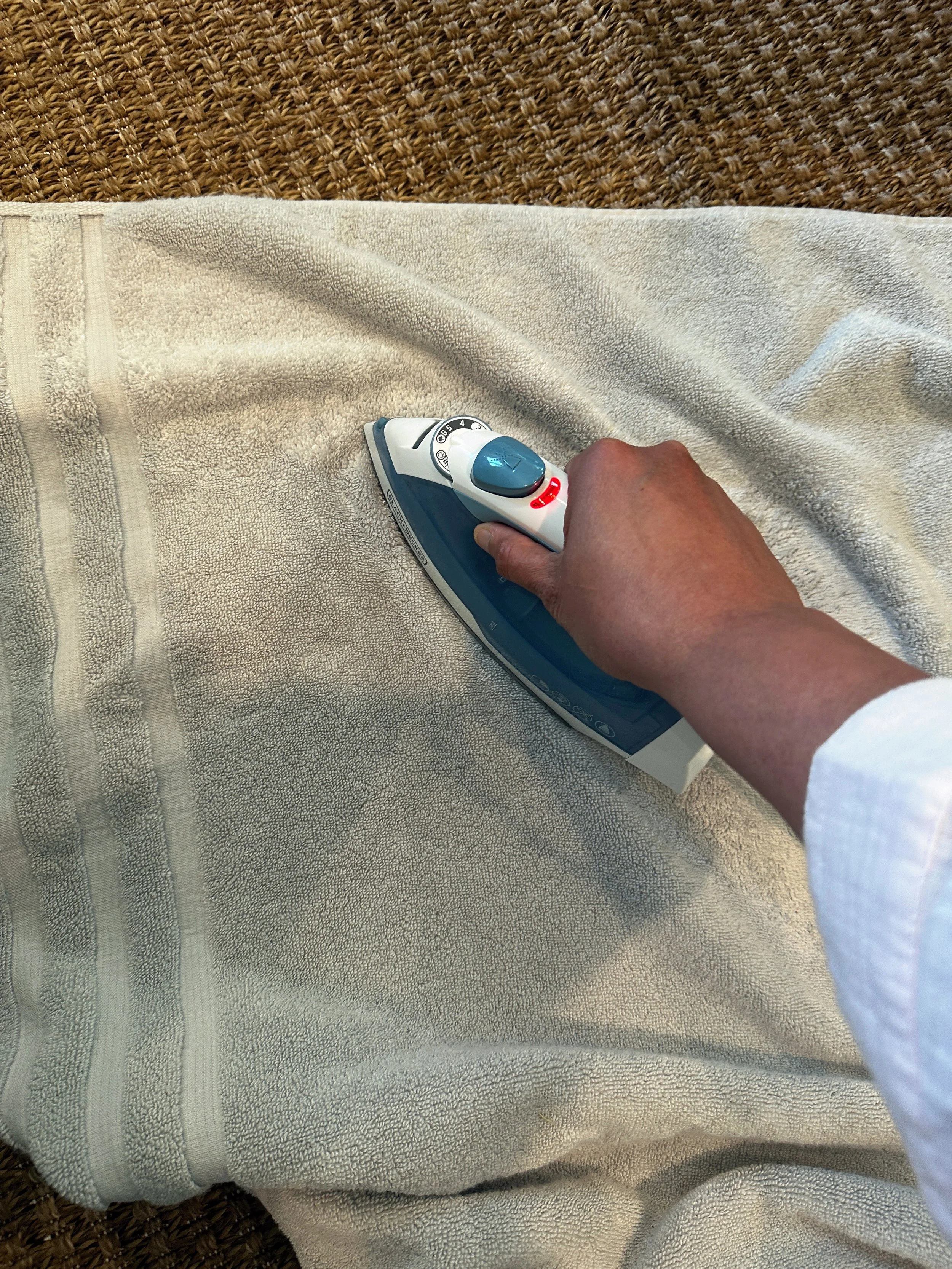
Again— slow and steady
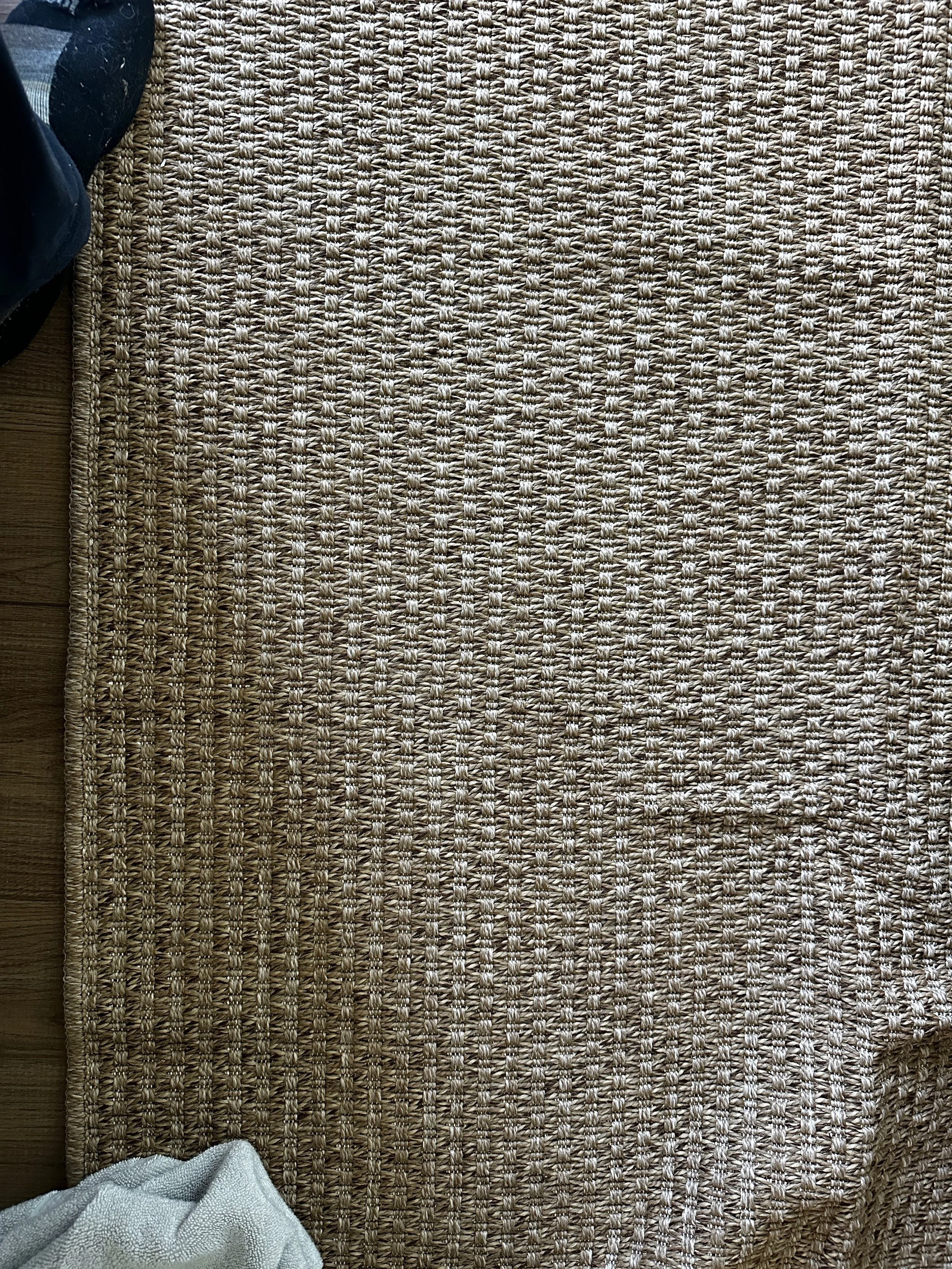
100% better already!
What Not to Do
To keep your jute rug looking its best, avoid these common mistakes:
Don’t saturate it with water
Don’t use high heat directly on the fibers
Don’t fold the rug for storage
Don’t drag heavy furniture across it
Don’t steam aggressively without a protective barrier
Jute is durable for everyday use, but it’s still a natural material that benefits from gentle care.
How Long Does It Take for a Jute Rug to Flatten?
Most minor wrinkles relax within 24–72 hours. Thicker rugs or deeper creases may take up to a week to fully settle. The key is patience. Gradual adjustment works far better than aggressive heat or moisture.
How to Prevent Wrinkles in the Future
Once your rug is flat again, these simple habits can help prevent future rippling:
Use a rug pad underneath
Rotate the rug every few months
Store rugs rolled, never folded
Keep indoor humidity relatively stable
Vacuum gently without using aggressive beater bars
A good rug pad is especially helpful because it supports the weave evenly and reduces shifting and buckling over time.
Some Final Thoughts
Jute rugs are one of those home pieces that instantly make a space feel grounded and inviting. A few wrinkles after unrolling are completely normal — and thankfully, usually temporary. With a little time, gentle handling, and minimal moisture, your jute rug should flatten beautifully and settle naturally into your space.
Wonderful link-ups I enjoy—
Mondays - Sweet Tea & Friends, Hearth & Soul Community, You Are The Star, Love Your Creativity Link-Party // Tuesdays- Tuesday Turn About, Nature Notes // Wednesdays- Karin’s Kottage , Wonderful Wednesday Blog Hop, Homestead Blog Hop, Happiness is Homemade // Thursdays-Thursday Favorite Things Tablescape Thursday // Fridays- Farmhouse Fridays, Five Minute Friday Crazy Little Lovebirds, A Morning Cup of Joe, Saturday Sparks Link Party, Happiness is Homemade // Tea on Tuesdays (3rd Tuesday of the Month), Create, Bake, Grow & Gather Party